On 7/25, from about 10 AM - 12:45 PM, I attended a community meeting about the Mormon Slough Restoration Project that was held at The Sycamore on 630 E Weber Ave in Downtown Stockton. The Restore the Delta non-profit was the main host for the event, along with local agencies and tribal governments that are affiliated with the Mormon Slough Restoration Association. Essentially, this coalition is focused on establishing a long-term revitalization and flood control project for Stockton’s historic Mormon Slough, a waterway that branches off from the Calaveras River, but was dried out 116 years ago. In modern times, Mormon Slough has become known as a place where numerous homeless encampments are located, and as a place to dump trash and abandon dogs. Vice Mayor Jason Lee and Councilmember Mario Enriquez were both present, along with people from various orgs in the local area. A reporter from ABC10 came to interview some of the speakers along with taking pictures of the meeting. I had intended to attend an earlier meeting back on 5/16, but was preoccupied with a family get-together in Sacramento.
https://www.youtube.com/watch?v=qZXEhNYiQEg
I saw quite a few familiar faces while at this meeting, including @aleiva01. I talked to someone at the event who was concerned with questions about the likelihood of gentrification and displacement of homeless and low-income communities where several neighborhoods in central and southeast Stockton cut across the waterway, in particular historic Little Manila, Gleason Park, The Homestead, and South Mormon Channel. The executive director for Restore the Delta, Barbara Barrigan-Padilla, made a comment during the opening to the meeting in regards to potential displacement with the restoration project, saying that property prices would most likely rise 10 - 15%, but downplayed it and argued that restoration of the Mormon Slough would increase generational wealth for homeowners that live near the waterway. I wasn’t convinced by this statement as it didn’t take into account any potential disparity between tenants and homeowners. An increase in property prices will drive up a demand for housing in the Mormon Slough area, inevitably leading to higher rent prices. Even an uptick in rent by a few percentages is a lot for many people, especially with the current economy right now. Only people who actually own their homes outright may benefit from the restoration project, but even then, an increase in property prices can also affect homeowners negatively if property taxes and home insurance rates increase as the Mormon Slough area starts to look “nicer,” to the point where homeowners can no longer afford to own their homes. 
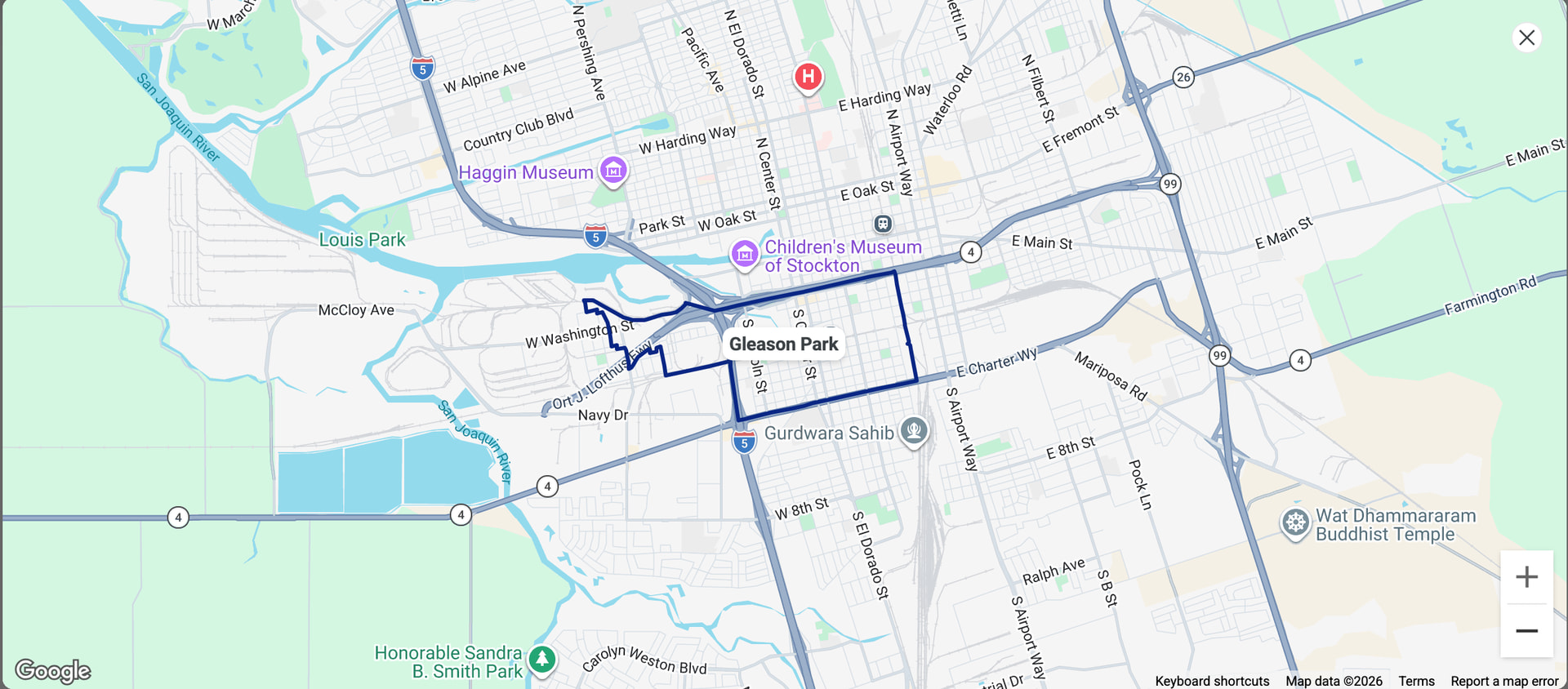
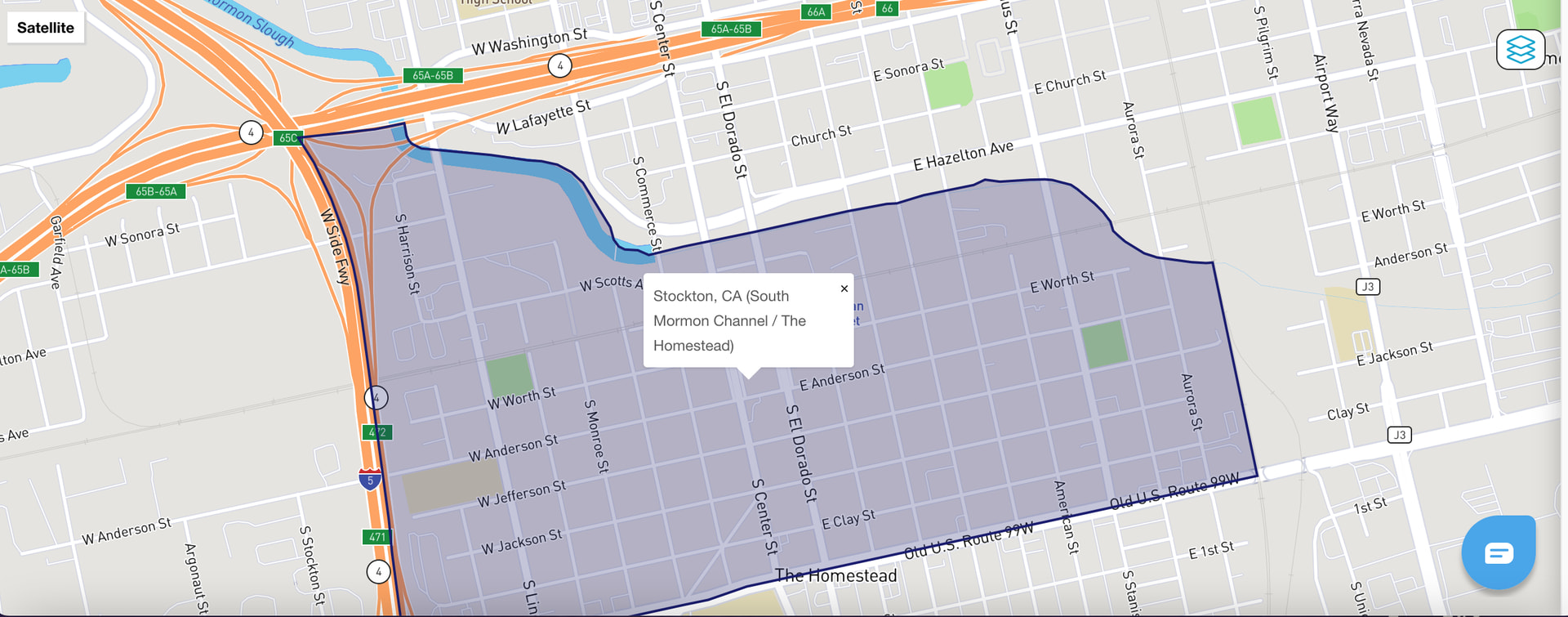
I left my contact info with the person who raised this concern with me and mentioned to them our upcoming General meeting and coffee social in early August. This person was also concerned that only the needs of home owners/property owners in the Mormon Slough area were really having their needs listened to, and not of tenants or obviously the homeless population living there (always the most glaring elephant in the room, tbh, with restoration projects like these).
This is probably me proposing something that is too big for WCU to handle given our actual capacity, but I think it would be interesting to do some research into people living around the Mormon Slough area to understand how many are tenants compared to homeowners in order to develop a better understanding as to how the Mormon Slough Restoration Project will actually impact people within this area of Stockton in the upcoming years when it is actually implemented. On 7/26, I was talking with our former Secretary @Bozzii to mull over my thoughts on this as a potential side quest related to tenant organizing. A challenge that WCU has faced multiple times over the last few years is that many of our side quests have been reactionary rather than proactive, that at times we have fallen into the activist tendency of responding to politically charged situations within leftist spaces until most people resume back to their daily lives despite situations such as the genocide in Gaza and ICE arrests still happening. I feel like our After Hours discussion format is a good vehicle to still have conversations about current events as I don’t think WCU should opt out entirely from responding in the moment to situations that could activate a lot of people, even if the window of time is brief. What I think WCU should focus on is being more intentional in engaging in side quests that operate from the notion of building long-term collective power with working-class neighborhoods in Stockton and the broader San Joaquin area. The point of our org is to be different from usual leftist orgs or non-profits, which usually means doing work that is not as “glamorous” and won’t necessarily yield big gains for a long while. This is something I feel WCU shouldn’t shy away from, although I also think finding a balance between doing the hard work and finding more accessible avenues of participation for newcomers and membership is something that is important for the longevity of WCU’s organizing goals. I think we have laid the groundwork for more accessible avenues, such as coffee socials and After Hours.
TLDR, what I’d like to mention and propose during the General in August is researching areas of Stockton and San Joaquin that have restoration projects proposed/planned by city/county governments or non-profits and where those projects may intersect/potentially disrupt working class neighborhoods.
Given that something like the Mormon Slough Restoration Project will probably take decades to actually come to fruition, what I’m proposing is centered on my belief that WCU should invest over the long-term in building an understanding of areas in San Joaquin that could help us find more leads for our tenant union campaign. So that once certain restoration projects actually begin and more people start to notice, we would be less reacting to the situation, but being more proactive when channeling the potential energy from tenants upset with rent hikes and who have been displaced due to their apartment complex being demolished for luxury condos, etc. Given that these kinds of projects take several years to implement, there’s opportunity to get ahead and do research and inform people in areas potentially affected by these projects about the implications of them and how a project like Mormon Slough doesn’t address homelessness in that area, but may further exacerbate it. I’m not necessarily proposing to do canvassing or tenant organizing in these areas, but rather to lay some groundwork on researching economically stressed areas that have also been deemed as burdensome by local governments in the San Joaquin County. As Education Coordinator, I want this proposal to be more aligned to community education than necessarily organizing, although with the hope that doing a side quest like this may lead to some effective organizing attempts in the future.
There was more of an intersection than I expected between my growing environmentalist interests and goals/interests aligned with WCU when attending this meeting that feels connected to my ongoing project of developing a practical idea of what working-class environmentalism looks like in a city like Stockton.
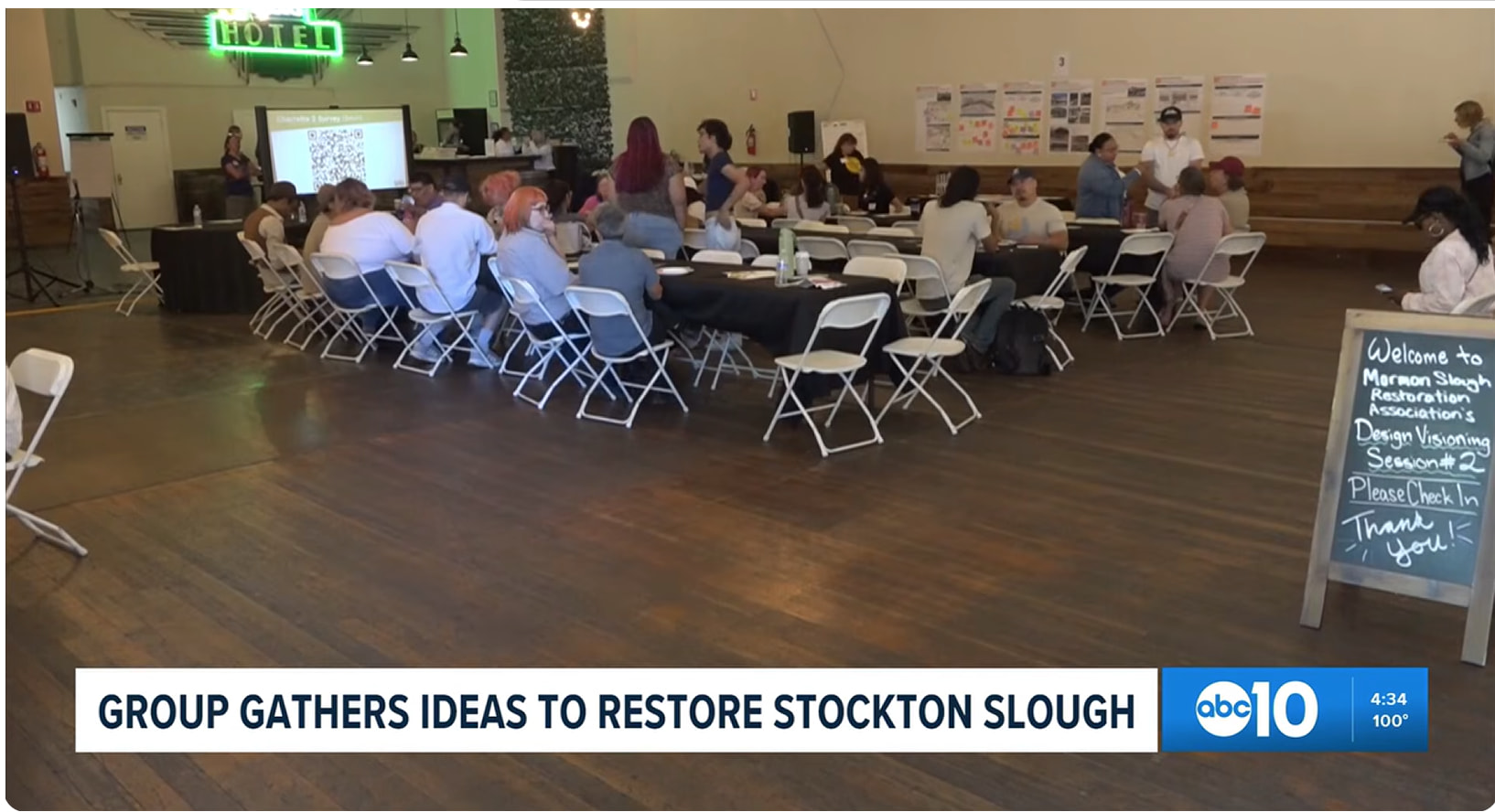
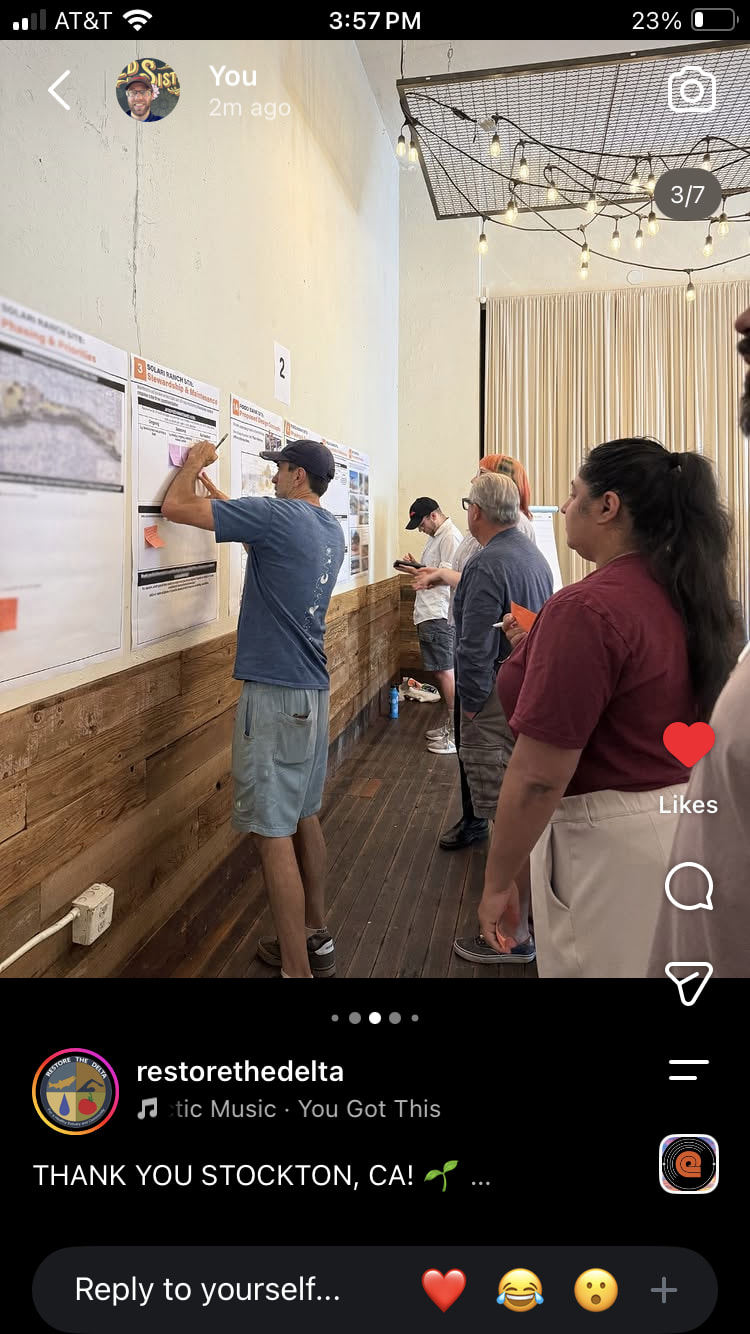
A couple of pics of me while at the Mormon Slough Restoration Project event.